Wildlife Wonders Beneath the Waves
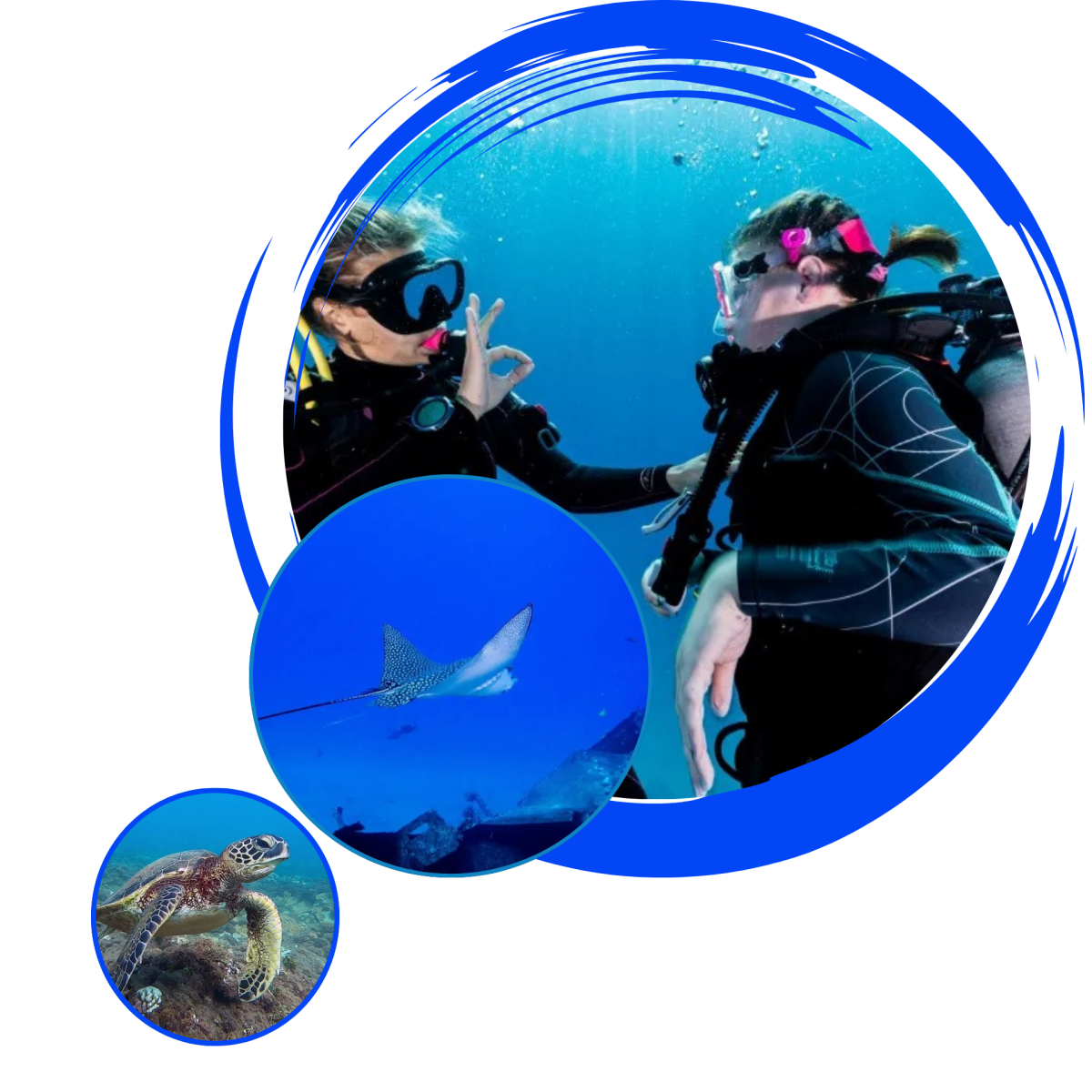
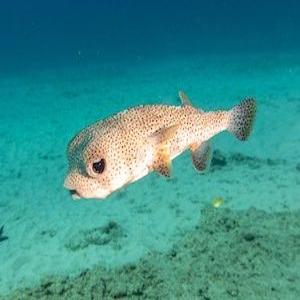
Sea life encountered varies as dramatically as the sites. The beauty of the ocean is no dive site is the same two days in a row. Local creatures you could encounter in the bay include everything from green sea turtles to Hawaiian monk seals (endangered) to whale sharks, humpback whales, white tip reef sharks, humuhumunukunukuapua’a (Hawaiian state fish), puffer fish, moray eels and SO much more!
ADDITIONAL DIVE SITES AROUND OAHU
Sea Tiger
This wreck dive is deep and HUGE! A favorite of many Oahu divers.
-
120 ft
-
The Sea Tiger has a complicated past. Built in the 1980s as the Fong Seong No. 303, this 189’ Taiwanese fishing trawler was confiscated in 1992 after trying to smuggle 90+ Chinese immigrants into Honolulu. It was sold by the Dept. of Justice to a conservation group, who quickly resold it to a Vietnamese fisherman, who renamed it the Sea Tiger. He was repeatedly fined for allowing the vessel to pollute in the harbor (Pier 40). Eventually it was sold at auction to the now defunct Voyager Submarine Co. in 1994. It was cleaned and prepped as an artificial reef, and sunk in 1999. The wreck is intact and sits upright on the bottom.
With proper training and equipment the wreck can be fully penetrated and explored and is 150-feet of incredible sights. Divers can penetrate the Sea Tiger through the cargo holds and bridge. Despite some minor decay inside the ship, the wreck is remarkably intact making it a unique dive for wreck enthusiasts.
-
The wreck is home to schools of Longfin bannerfish, Pyramid Butterflyfish, and Moray eels. Sponge crabs, Slipper lobster, seastars, and many coral species occupy the wreck. Eagle Rays, Green turtles, Reef sharks, and numerous other fish are common sights.
-
Advanced Open Water (AOW)
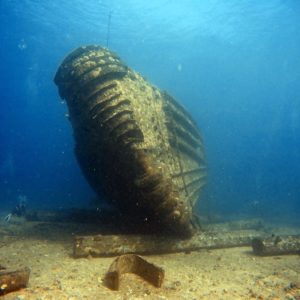
Navy Tug
This West side wreck dive site is known for big and small sea life!
-
65 ft
-
The USS Nashua (YTB-774) was, and is, a US Navy ship. Built in 1965 by Marinette Marine, this 106’ ship (29’ beam) was one of the Natick class Large District Harbor Tugs. Using its 2,000 HP engine, the Nashua would tow and push other naval ships (possibly even the YO-257) at the Subic Bay Naval Station, Philippines. Secondarily, it served as waterfront fire response and as a harbor patrol craft. Following the closure of the base in 1992, the Nashua was transferred to Pearl Harbor and then retired from service in 1994. It was intentionally sunk in 2012 as a training site for Navy’s Mobile Diving and Salvage Unit One, stationed at Pearl Harbor. The Nashua currently lists to starboard but can and will be repositioned by the Navy for training purposes.
-
It is covered extensively with coral growth and supports huge school(s) of Blueline snappers. Yellow Tangs, Trumpetfish, Brown surgeonfish, Cushion stars, and Slipper lobsters are other common sightings.
-
Advanced Open Water (AOW)
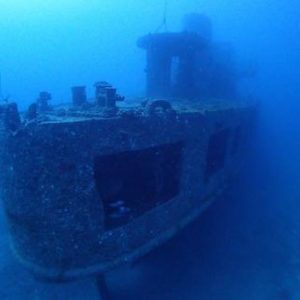
YO-257
Located alongside the San Pedro, if conditions are right you can sometimes dive two wrecks on the same dive!
-
80-105 ft
-
The YO-257 was built for the US Navy and was originally designated YOG-72. She is a 174’ long, self-propelled gas barge (yard oiler) built in 1945 by the Puget Sound Naval Yard. Built to refuel other ships at sea, the YO-257 could carry 200,000 gallons of fuel. After WWII, the YO-257 worked in the Pacific carrying asphalt to remote atolls for runway construction and was briefly loaned out to the US Coast Guard. The YO-257 was sold to the Atlantis Submarine Co. and intentionally sunk at its current location in 1989.
-
Large schools of Blueline snappers now live on the wreck, as do schools of a variety of butterflyfish (including Lined, Pyramid, and Raccoon) and unicornfish (including Sleek, White-margin, Orangespine, and Bluespine). Squadrons of Spotted Eagle Rays are commonly seen transiting the area between YO-257 and the San Pedro wreck site.
-
Advanced Open Water (AOW)
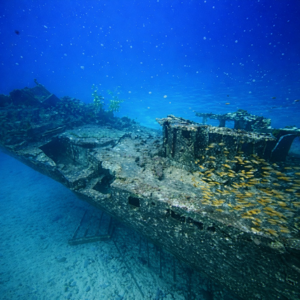
SAN PEDRO
Located alongside the YO-257, if conditions are right you can sometimes dive two wrecks on the same dive!
-
80 ft
-
Built in Japan around 1946, the 111’ long San Pedro was a Korean owned long-line fishing vessel which operated off the Big Island, mostly targeting Swordfish and Tuna. In 1975, while carrying bait, food, and other cargo to an offshore fishing fleet, it caught fire off South Point. Badly damaged, it was towed to Keehi Lagoon. It sat derelict for years before being intentionally sunk next to the wreck of the YO-257 by the Atlantis Submarine Co. in 1996 to add more sights for their underwater tour. The San Pedro sits in around 80’ of water with the deck around 60’.
With proper training and equipment the wreck can be fully penetrated and explored and is 150-feet of incredible sights. Divers can penetrate the Sea Tiger through the cargo holds and bridge. Despite some minor decay inside the ship, the wreck is remarkably intact making it a unique dive for wreck enthusiasts.
-
Outside the wreck large schools of Blueline snappers and Butterflyfish are common, while looking inside expect to encounter Soldierfish, Squirrelfish, and Cardinalfish.
-
Advanced Open Water (AOW)
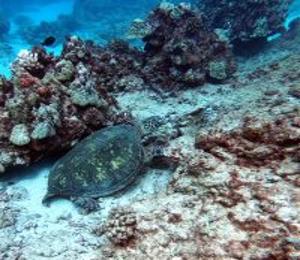
NAUTILUS REEF
Many overhangs, ledges and crevices keep this dive interesting!
-
35-45 ft
-
Nautilus Reef sits just off Point Panic, a popular shore dive site off downtown Honolulu. This patch reef is interspersed with, and surrounded by, sand flats and rubble. The reef has moderate coral cover and plenty of overhangs, ledges, and crevices for a wide variety of marine life.
-
Green turtles are often seen here, as are Yellow Tangs, Longnose Butterflyfish, Brown Surgeonfish, Yellowfin Goatfish, and Octopus.
-
Open Water (OW)
EWA PINNACLES
One of Oahu’s only deep, dive-able reef sites!
-
100 ft
-
One of Oahu’s only deep-diveable reef systems, the Pinnacles are a grouping of natural rock formations which rise up 20-30’ above the bottom. These pinnacles have lots of overhangs, ledges, sheer walls, and other structure which creates a variety of microhabitats, and with very high coral cover on their tops, this site supports an abundance of aquatic life.
-
Huge schools of Blacklip butterflyfish and Hawaiian Dascyllus feeding high off the reef are often the first thing people notice. Upon a closer look you can find rare endemic species like Hawaiian Lionfish and Bandit Angelfish in the reef. Octopus, Slipper lobsters, and Knobby seastars are commonly seen, as are several shark species and Spotted Eagle rays. If you are lucky, even Hawaiian Monk Seals have been seen at the site. As you ascend for your safety stop, pay attention to the plankton in the water column as you can regularly see Comb jellies, Salps, and other drifting sealife.
-
Advanced Open Water (AOW)
KEWALO PIPE
Depth varies along this artificial reef, perfect for new divers!
-
30-65ft
-
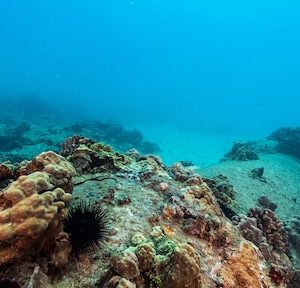
This site is named for the old, and now decommissioned, 48” storm-water discharge pipe that runs perpendicular to the shore for a distance of about 400 yds. The steel pipe itself rests upon sand and acts as an artificial reef. The depth varies depending on the distance from shore and small patches of rock and coral can be observed on either side of the pipe.
-
Its moderate coral growth has started to attract more marine life. Butterflyfish, Wrasses, Surgeonfish, and Morays are all frequently encountered here.
-
Open Water (OW)
HORSESHOE REEF
Fantastic coral cover is what this site is known for! Where there is great coral cover, there is lots of sea life.
-
35-45 ft
-
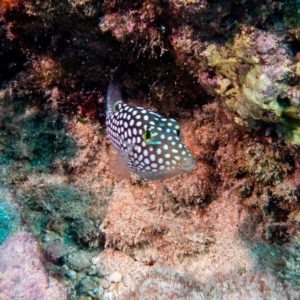
With nearly 100% coral coverage over most of the area, and higher coral diversity than most places on Oahu, Horseshoe Reef is a spectacularly beautiful site. That it sites right off downtown Honolulu makes it all that much more amazing. To those with a good imagination, the reef is shaped roughly like a horseshoe and depths range from 35-55’. With all this high quality habitat you can find lots of organisms that make their homes in corals.
-
The corals are home to dozens of shrimp and crab species. Coral Crouchers, Dragon Morays, Yellowhead Morays, Leaf Scorpionfish, and Anglerfish are common too.
-
Open Water (OW)
[drawattention]